

Air Quality Improvement at an Airport
A prominent international airport in India sought an advanced solution to eliminate persistent odour issues and corrosion risks arising from its sewage treatment plant.
Published : 18 Jul 2025
The Problem
-
1
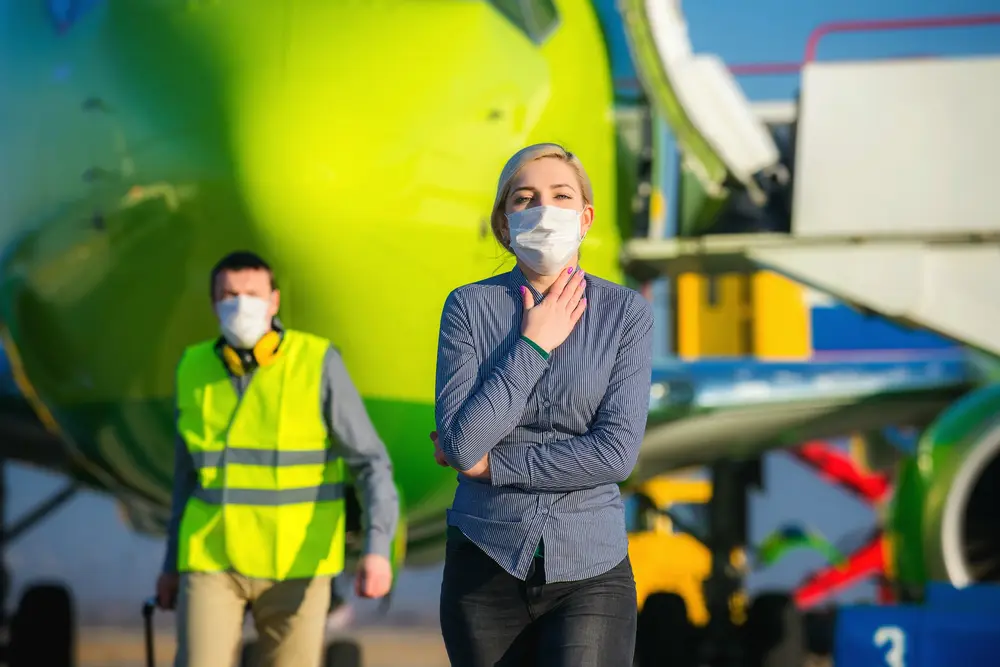
Hydrogen sulfide exposure led to health issues and discomfort for employees.
-
2
Corrosive gases damaged metal and electronics, raising maintenance costs and lowering reliability.
-
3
Conventional filters saturated fast, lowering efficiency and causing frequent disruptions.
-
4
Chemical treatments produced extra waste and emissions, missing sustainability targets.
The OCU Solution
-

Advanced Odour Control Unit
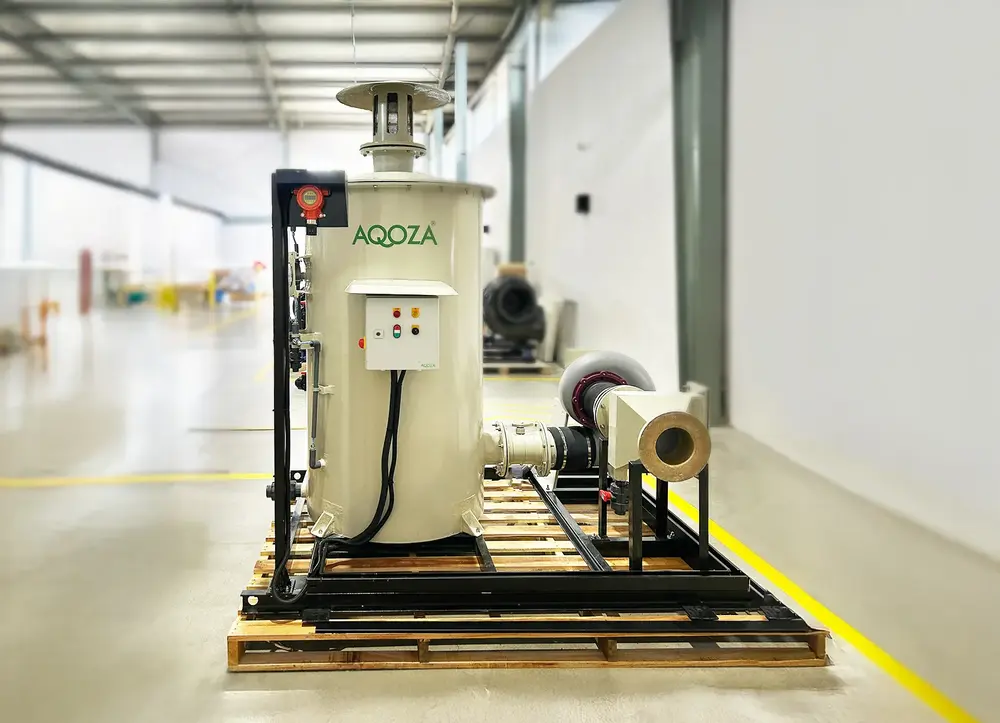
Aqoza installed a high-capacity 1980 m³/hr odour control system designed to capture and neutralize harmful gaseous compounds.
-

Specialized Filtration Media
The unit utilises Aqoza’s premium activated carbon made from high-quality coconut shells, engineered for superior adsorption and extended lifespan.
-

Enclosed Collection System
Fibreglass Reinforced Polymer (FRP) sheets were used to cover the STP tanks, preventing odour leakage and directing gases to the filtration unit.
-

Proven Performance
Post-installation monitoring confirmed H₂S levels dropped from 100 ppm to below 1 ppm, ensuring a cleaner, safer, and odour-free environment.
-

Long-Term Efficiency
The dry absorption system operated with minimal operator intervention, required no chemical consumables, and offered extended media life with significantly reduced operating costs.
Improvements Observed in the Airport
Odour from the 1.5 MLD Sewage Treatment Plant was completely neutralized.
-

Improved Working Environment
Security teams now work comfortably near the STP, boosting focus and efficiency.
-

Reduced hydrogen sulfide emissions
It reduced corrosion and protected key airport infrastructure.
-

Zero complaints reported.
-

2000 m³/hr Clean Airflow
The OCU treats 2000 cubic meters of air per hour, maintaining safe and odour-free discharge.

Business Value
Delivering long-term efficiency, safety, and sustainability through advanced odour management.
-

Employee Well-Being
A cleaner, odour-free environment enhanced staff comfort, productivity, and satisfaction.
-

Environmental Responsibility
Sustainable, chemical-free filtration aligned with the airport’s commitment to eco-friendly operations.
-

Cost Efficiency
Reduced maintenance and eliminated chemical usage lowered operational expenses and improved long-term cost management.
-

Asset Protection
Corrosion control extended the lifespan of infrastructure and protected critical electronic systems.