Addressing STP Odour Challenges: Improving Air Quality in Residential Complexes
Published : 13 Jul 2025

BACKGROUND
A well-established residential apartment complex was facing persistent odour issues in Bangalore, Karnataka. Housing a significant number of people, they had a Sewage Treatment Plant (STP) in the basement car parking area, which was causing unpleasant odours affecting the health and wellbeing of the residents. To effectively mitigate the issue and improve air quality, the Residence Association decided to go for an Odour Control Unit (OCU) as a long-term solution.
PROBLEM
The basement STP was producing Odour causing discomfort to people. The existing vent system took the odour from the basement STP to the terrace and vented it to the atmosphere. The prolonged exposure to the odour caused Nausea and other health risks to the residents. Due to the high corrosive nature of the odour causing gases the vent was already disintegrated and corroded resulting in leaks at multiple points, this processed an additional financial challenge to replace the complete ducting system yet the odour issue remains unresolved.
Also, the leaked gases were also causing corrosion to the parked vehicles and infrastructure of the apartment complexes. The unavailability of space for installing extra equipment inside the STP room was also an issue. Implementing an effective odour control solution was critical to address these challenges, reduce health risk and ensuring air quality while enhancing the overall livability of the surroundings.
SOLUTION
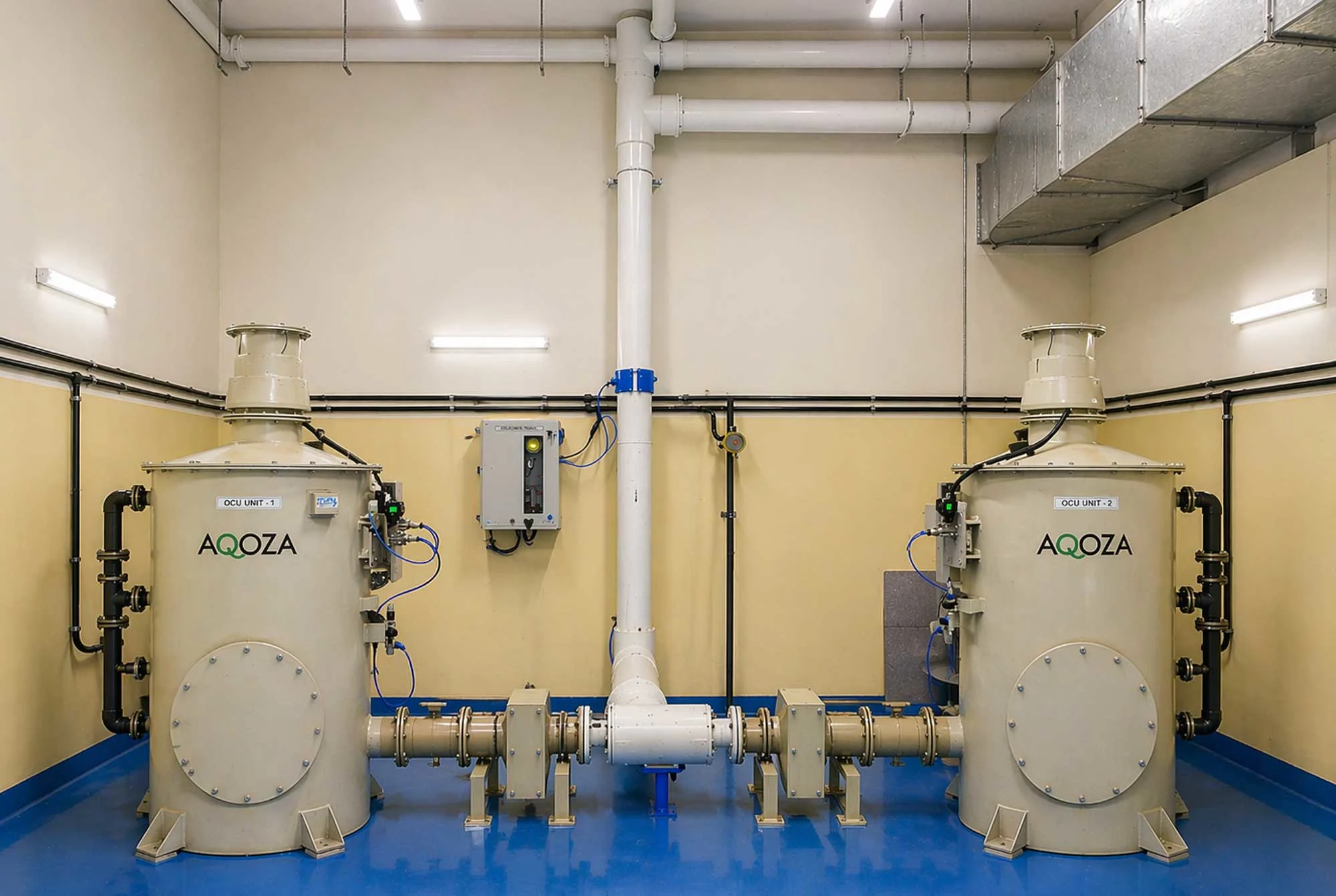
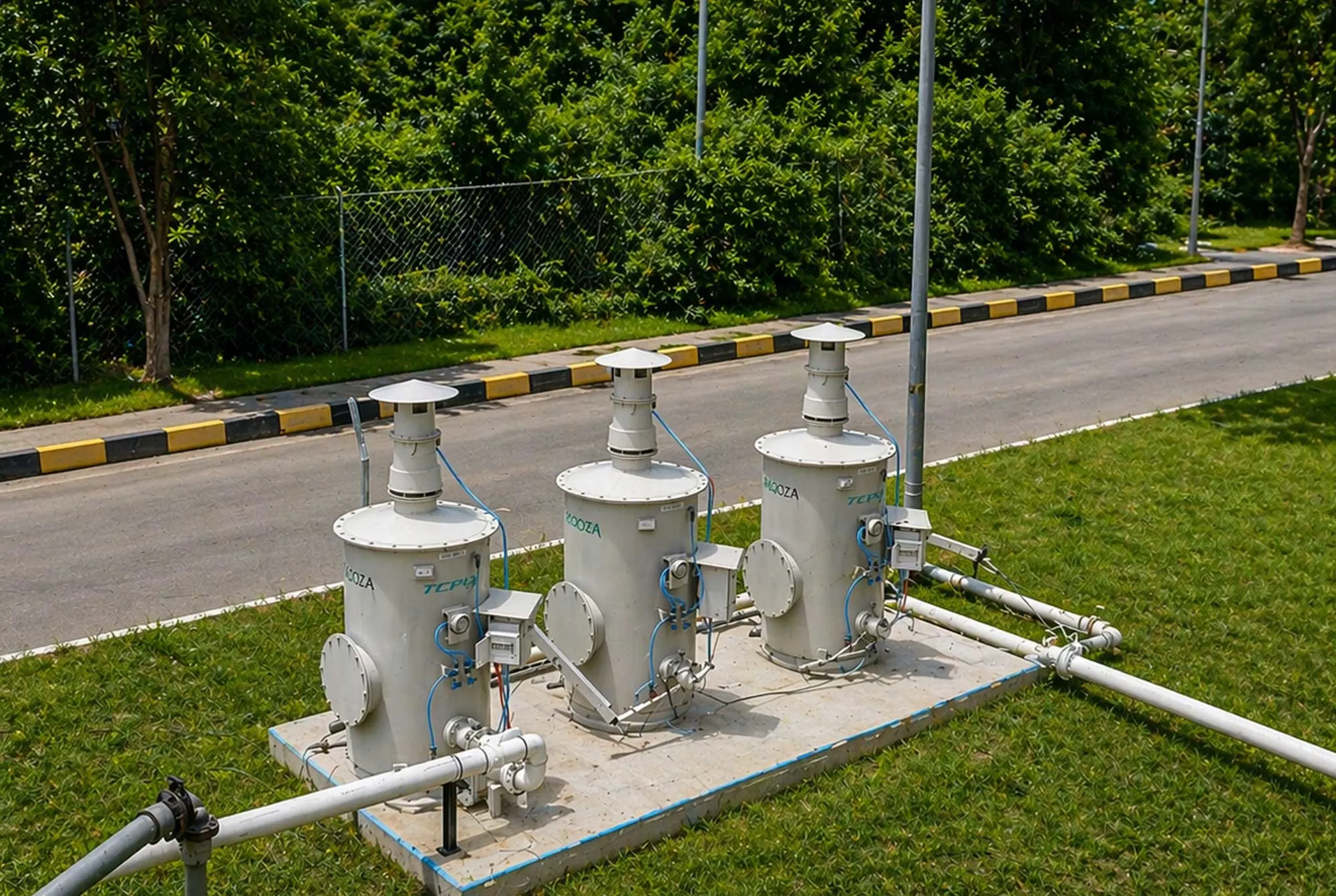
A detailed site assessment was conducted to evaluate the odour emission levels from the STP. The air volume of the odour-emitting process tank was calculated, and based on the findings, a 600 m³/hr capacity OCU was recommended. The odourous gases from the process tanks were routed to the OCU, where they passed through coconut shell-activated dry carbon media, which is water-regenerable and highly efficient in adsorbing odour-causing H₂S gas molecules, along with Ammonia, Methyl Mercaptans and other VOCs, which were the primary cause of the unpleasant odour.
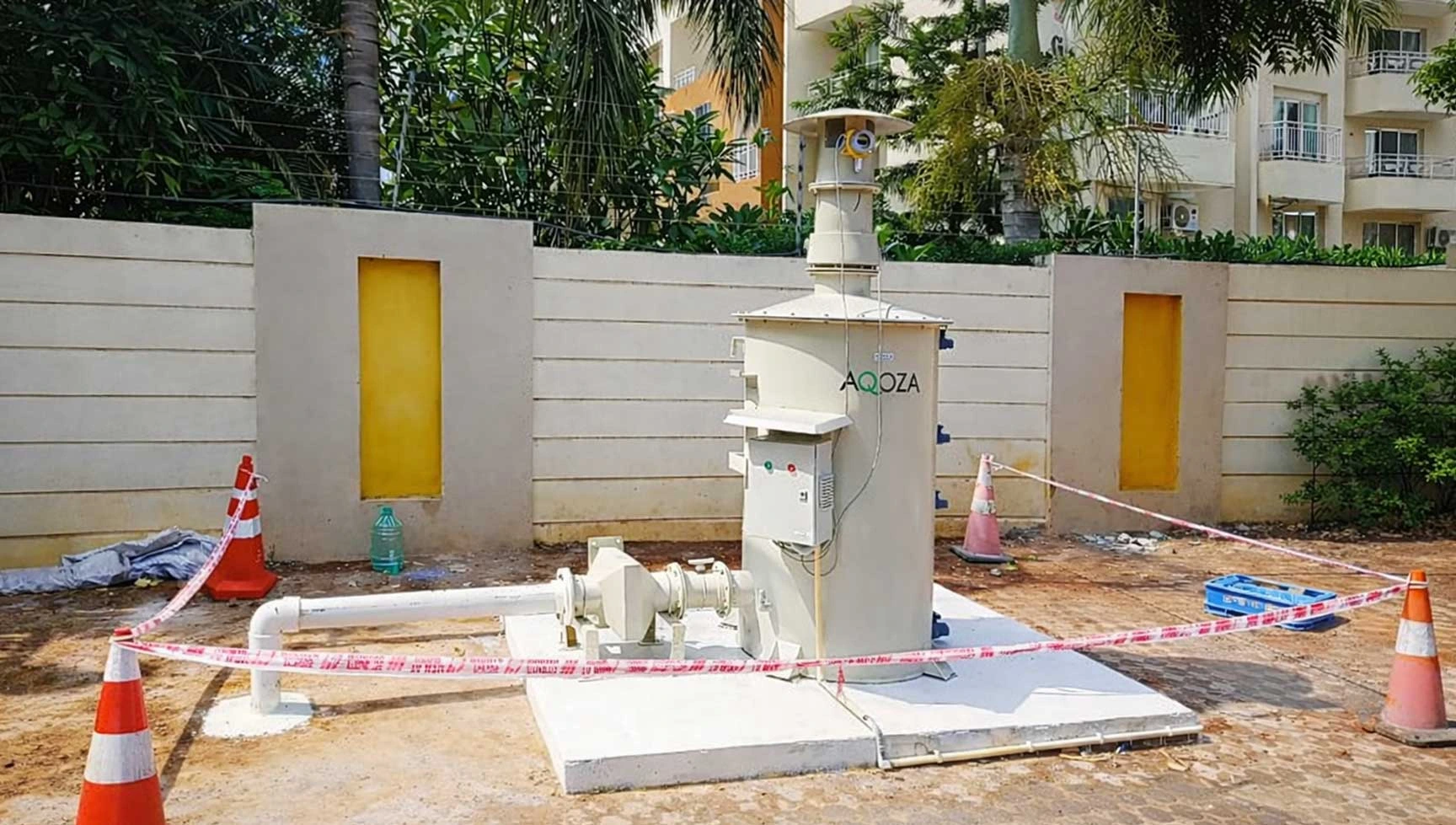
As a result, the treated air at the outlet of the OCU had H₂S levels reduced to less than 1 ppm which is effectively odour-free. The system guaranteed 99.9% removal of odourous compounds. The odour control unit outlet ensures odour-free discharge, allowing gases to be released at the same level. Due to space constraints in the STP room, the system was installed one level above in a suitable location, as visible in the picture. Being a standalone system, it requires minimum to zero operator assistance.
RESULT
The installation effectively eliminated odour emissions. Implementing the OCU eliminated ducting to the terrace, as air can now be discharged at the same level, along with the high-rated blowers that were previously used to carry air to the terrace, saving the residents' association significant OPEX.
As the Acidic gases causing corrosion and odour are being taken care, the corrosive effects have now faded. The ducts now only handle fresh air intake and are no longer affected by corrosion. This helped in improving air quality enhancing overall living conditions. The system was designed for efficient operation with minimal intervention, providing a reliable and long-term solution for odour control.
CONCLUSION
The successful installation of the OCU completely eliminated the odour issue, resolving a major health concern for the apartment complex. The residence association acknowledged the effectiveness, reliability, and long-term efficiency of the solution and now, the Builder is considering similar installations for other new and existing projects to enhance air quality and ensure a better living environment.
ALSO READ
- Occupational health hazards in sewage and sanitary workers Article by PMC
- Biogenic sulfide corrosion in sewage environments Learn from Wiki
- Learn more about AQOZA’s Odour Control Solutions and Units
- Explore our Air Filtration Technologies
- See how we control and monitor Corrosion